Introduction
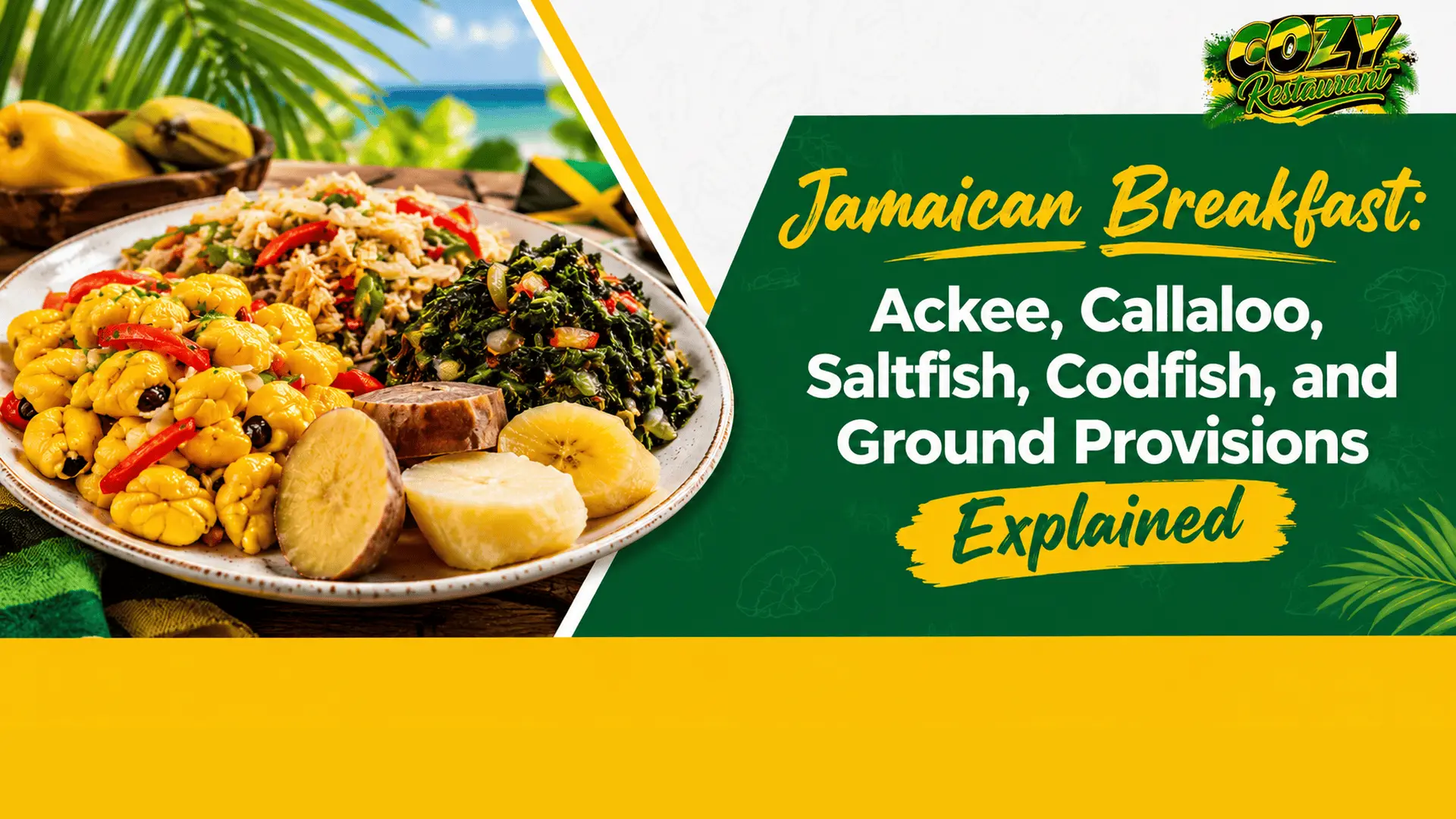
If you’ve ever sat at a Jamaican kitchen table on a Sunday morning, you know breakfast isn’t a small conversation. It is a huge, delicious spread: saltfish and onions sizzling in a pan, golden ackee, steaming callaloo, boiled yam, and dumplings of green bananas for sides. It’s a mouthwatering meal that keeps you going throughout the day.
At Cozy Caribbean Restaurant in Fort Lauderdale, we introduce South Floridians and visitors to the familiar taste of home-cooked Caribbean food.
What Makes a Jamaican Breakfast Special?
This meal centers on big flavors, substantial portions, and locally grown, locally caught food. It has a long history that stretches back over many centuries and culminated in the amalgamation of West African, Indigenous Taíno, British, Indian, and Chinese influences in Jamaican cuisine. Ackee came from West Africa; salted cod was imported from Europe, and the ground foods like cassava, plantain, yam, and tapioca were even essential foods long before many modern recipes were put in writing. Traditional Jamaican breakfasts often combine ackee and saltfish with callaloo, boiled yam, green bananas, or dumplings for a filling start to the day
Unlike sweet cereals and pastries, traditional Jamaican breakfasts are savory, mostly made with vegetables, fish, ground provisions, and herbs.
Ackee and Saltfish Is the Jamaican National Dish
Ackee and saltfish is Jamaica’s national dish and a popular breakfast choice across the island.
Technically, ackee is a fruit, but it cooks and tastes like a vegetable. When ripe, its bright red pods open on their own to display soft, creamy yellow arils. After a brief sautéing, they become scrambled egg-like and have a mild, buttery taste that complements the salty taste of the fish perfectly.
If you’d like to try it without cooking, our Jamaican breakfast menu includes ackee with corned beef and cabbage or broad beans.
A Safety Note
Unripe ackee contains a natural toxin called hypoglycin. The seeds and pink membrane should always be removed, and only the arils of fully ripe, naturally opened pods are eaten. Carefully controlled and frequently exported, canned ackee is a safe and convenient alternative for cooks outside Jamaica.
For safe preparation, follow established food-safety guidance on selecting and handling ackee, and use commercially canned ackee according to its label instructions
Saltfish vs. Codfish: What Is the Difference?
Saltfish is fish that has been salted and dried, often Atlantic cod. These days the term “saltfish” is also used to refer to pollock or other white fish that are treated in this manner, and “codfish” generally refers to real cod, which is often thicker and flakier than other varieties.
The main thing is to take off the extra salt when it comes to cooking. Place in cold water and let stand overnight, changing the water once or twice. Alternatively, if you have limited time, boil for 15 to 20 minutes, drain, and repeat if it still tastes quite salty. Then hand-flake the meat and remove its skin and bones. One of the reasons why saltfish made its way into being a pantry staple is that it keeps well without refrigeration.
Before cooking, taste the saltfish after soaking or boiling to check its salt level, as the amount of salt remaining can vary depending on the fish and preparation method.
Callaloo: The Green Heart of the Morning Plate
Jamaican callaloo refers to the leaves of the amaranth plant and is not to be confused with those of the taro-leaf soup in Trinidad and some other islands. When cooked down with onion, garlic, tomato, and thyme, it is earthy and slightly sweet, reminiscent of spinach with more flavor.
Callaloo is another popular Jamaican breakfast that is often prepared by many families with salt fish. Others serve it on its own with fried dumplings or boiled yam. Use canned callaloo if fresh is not available, or use fresh spinach if possible.
You can order steamed callaloo at Cozy Caribbean as part of a Jamaican breakfast.
Ground Food: The Hearty Foundation
In Jamaica, starchy staples like yam, cassava, and green bananas are commonly served as ground provisions. These are what make Jamaican breakfast so satisfying. Common choices include:
- Yellow yam and white yam: dense and sweet, and good for absorbing sauce.
- Green bananas: boiled in their skins until soft and have a firm, potato-like texture.
- Sweet potato: delicious on its own with sweet fish.
- Dasheen and coco: creamy root vegetables with an earthy taste.
- Breadfruit: roasted, boiled, or fried with a soft, bready texture inside.
Most ground foods are just boiled in light salt, so that their natural flavor emerges. Although not really a ground food, boiled dumplings are the usual accompaniment on a plate, and are made from flour, water, and a smidgen of salt.
Other Favorites on the Table
Ackee and callaloo are not the only breakfast foods found in Jamaica. These are frequently found with them:
- Fried dumplings (Johnny cakes): golden and slightly crisp on the outside and soft on the inside.
- Fried plantain: sweet, caramelized, and too good to pass up.
- Bammy: a flat cassava bread, which is usually steamed or fried.
- Mackerel rundown: mackerel simmered in seasoned coconut milk until rich and creamy.
- Cornmeal porridge: banana corn or hominy corn porridge, typically sweetened and flavored with nutmeg and cinnamon.
- Avocado: sliced avocado is referred to as “pear” in Jamaica and is a refreshing accompaniment to spicy foods.
End your meal with Blue Mountain coffee, cocoa tea, or fresh bush tea, and you have a full island morning!
How to Build a Jamaican Breakfast Plate
For anyone trying Jamaican breakfast at home, combining a savory main dish with ground provisions and a warm drink is a simple way to experience the meal’s traditional flavors.
- Choose your main. Ackee and saltfish, callaloo and saltfish, or mackerel rundown are a great place to start.
- Add your ground food. Boiled yam, green banana, or sweet potato provides the backbone to the plate.
- Add a dumpling or bammy. It adds comfort and texture to the plate, whether fried or boiled.
- For a sweet hint. Add avocado slices or fried plantain to round out the plate
- Serve a hot beverage. Coffee, cocoa, tea, or porridge round off the meal.
Easy Ackee and Saltfish Recipe
Ingredients
- Cooking Oil
- 1/2 pound (225 g) of saltfish, soaked or boiled and flaked
- 1 can (approx. 19 oz) ackee, drained gently
- 1 medium onion, sliced
- 2 scallions, chopped
- 2 cloves garlic, minced
- 1 tomato, diced
- 2 sprigs fresh thyme
- 1 whole Scotch bonnet
- 1 bell pepper
Preparation times and seasoning needs may vary depending on the saltfish used, so taste it before adding extra salt.
Method
- Step 01: Place in a large skillet over medium heat and heat until the oil is hot.
- Step 02: Add the onion, scallions, garlic, and thyme; cook until fragrant, about 2-3 minutes.
- Step 03: Add the bell pepper and tomato and cook for 3 more minutes.
- Step 04: Add the flaked saltfish and the whole scotch bonnet, and cook for 5 minutes, stirring occasionally.
- Step 05: Add the ackee; be careful not to overfold it, as it is delicate and tends to break easily. Simply heat through for 3-4 minutes.
- Step 06: Stir in black pepper, take off the scotch bonnet, and heat through.
- Step 07: Add extra salt only after tasting the fish for seasoning, as it will often be quite salty.
It is a Jamaican breakfast favorite which complements fried dumplings and boiled green bananas.
Tips for Preparing Jamaican Breakfast Foods
A few simple habits can make the difference between a good plate and a great one:
- Season in layers. First, add flavor by adding onion, garlic, and thyme before adding the main ingredients.
- Control the salt. After soaking, taste the saltfish to make adjustments before cooking.
- Handle ackee gently. Fold it in last. Do not stir.
- Use the Scotch bonnet with caution. Leaving the Scotch bonnet whole adds fruity aroma with milder heat.
- Don’t hurry the ground food. Cook until it is just tender, to retain shape and flavor.
With these basic ingredients, a traditional Jamaican breakfast can be prepared in less than an hour. Many other Jamaican breakfast recipes have also been passed down through generations.
The Modern Take on an Island Classic
Today’s cooks are putting fresh spins on old favorites. Ackee may be found in tacos or breakfast sandwiches, callaloo may be folded into omelets, or plant-based versions may be made with smoked mushrooms or hearts of palm, instead of fish. But it is the same at the center: fresh herbs, ample seasoning, and love shared between those who are dear.
Where to Find Jamaican Breakfast
At Cozy Caribbean, our family-run kitchen in Fort Lauderdale serves Jamaican breakfast dishes such as ackee with corned beef, codfish and okra, steamed callaloo, boiled ground food, roast breadfruit, and the porridge of the day. Browse photos of our dishes before you visit. Outside Jamaica, you can also cook this meal at home, since Caribbean grocery stores usually stock canned ackee, saltfish, and ground provisions.
Final Thoughts
Jamaican Breakfast isn’t just a recipe. It’s a tale of migration, resourcefulness, and flavor, served on a platter that invites all to sit for a while. Every ingredient has a purpose and a history, from the buttery soft texture of ackee to the earthy comfort of callaloo, the salty depths of codfish to the satisfying weight of ground provisions.
If you are up for the challenge, make up a classic Jamaican breakfast this weekend, share it with a friend, and you’ll see why Jamaicans love their breakfast so much and why it’s warmly received worldwide.
Ready to taste it for yourself? Call us to place an order for takeout or delivery, or visit us at 3007 West Commercial Blvd in Fort Lauderdale.