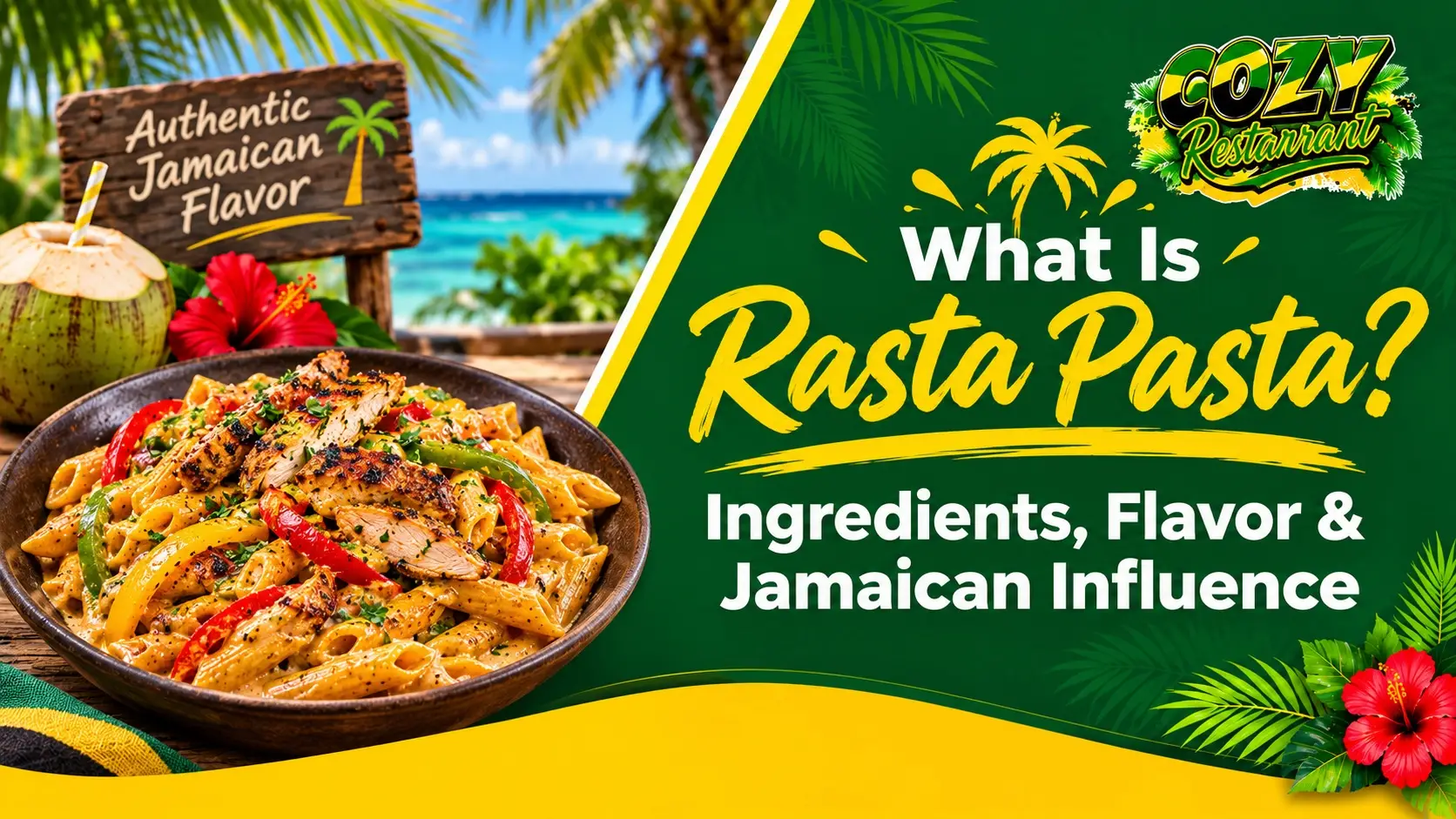
If you have seen rasta pasta on a menu or in a food video and wondered what makes it different from regular creamy pasta, you are not alone. It is one of the most searched Caribbean-style dishes right now, and for good reason: it takes a comfort-food favorite and gives it the bold, warm flavor of Jamaican cooking.
In this guide, we explain what rasta pasta is, what goes into it, how it tastes, where the Jamaican influence comes from, and how you can make a simple version at home.
What Is Rasta Pasta?
Rasta pasta is a Jamaican-inspired pasta dish. It usually combines pasta (penne, fettuccine, or rigatoni are common choices) with a creamy, spiced sauce and colorful bell peppers. Most versions include jerk seasoning, and many are served with jerk chicken or shrimp on top.
The name comes from the colors in the dish. Red, yellow, and green bell peppers are the classic mix, and those three colors are widely associated with Rastafari culture and Jamaican identity. That is why you will often see the dish called a rasta pasta dish or simply “Jamaican pasta.”
It is worth being honest about one thing: rasta pasta is not an old, traditional Jamaican recipe handed down for generations. It is better described as a modern fusion dish, where Italian-style pasta meets Jamaican seasoning. Cooks and restaurants in the Caribbean and across the Caribbean diaspora, including here in South Florida, each make it a little differently, so you will not find one single “official” recipe.
Rasta Pasta Ingredients
The ingredients vary from kitchen to kitchen, but most versions are built around the same core list.
The base
- Pasta: penne, fettuccine, or rigatoni hold the sauce well
- Bell peppers: red, yellow, and green, sliced into strips
- Onion and garlic for sweetness and depth
The Jamaican flavor
- Jerk seasoning, either a dry rub or a wet marinade
- Fresh thyme and scallions (green onions)
- Pimento (also called allspice), a signature Jamaican spice
- Scotch bonnet pepper for heat, used carefully or left out for a milder dish
The creamy sauce
- Heavy cream, or coconut milk for a dairy-free and slightly sweeter result
- Parmesan cheese in some versions
The protein (optional)
- Jerk chicken is the most popular choice
- Shrimp is a close second
- Vegetables only for a meatless version
If you are searching for rasta pasta ingredients because you are shopping for a recipe, the jerk seasoning and fresh thyme are the two items that matter most. Everything else is flexible.
What Does Rasta Pasta Taste Like?
The easiest way to describe the flavor is creamy, savory, and gently spicy, with a little sweetness from the peppers.
- Creamy: the sauce coats the pasta the way an Alfredo would, but it tastes less heavy because of the spices.
- Warm and smoky: jerk seasoning brings pimento, thyme, and a slow-building heat.
- Fresh: bell peppers add crunch and a mild sweetness that balances the spice.
The heat level depends on how much jerk seasoning and scotch bonnet the cook uses. If you are trying it for the first time, ask for a medium spice level or start with a mild version at home.
The Jamaican Influence Behind the Dish
What makes this dish “Jamaican” is not the pasta. It is the seasoning and the cooking approach.
Jamaican cooking is known for layering flavor with jerk spices, fresh herbs, scallion, thyme, and pimento. Jerk itself comes from Jamaica, where meats are seasoned with a spicy, aromatic blend and traditionally cooked over pimento wood. Rasta pasta borrows that same flavor profile and carries it into a creamy pasta sauce.
Coconut milk, another staple across Caribbean kitchens, often replaces dairy cream or gets mixed with it. This gives the sauce a rounder, slightly sweet taste that pairs naturally with the heat of the jerk seasoning.
If you enjoy exploring this style of food, you may also like our guides to 15 traditional Caribbean dishes and popular Caribbean cuisine dishes.
How to Make Rasta Pasta at Home
Here is a simple version for about 3 to 4 servings. Adjust the spice to your taste.
You will need:
- 12 oz (about 340 g) penne or fettuccine
- 1 lb chicken breast or thighs, sliced (or 1 lb shrimp)
- 2 tablespoons jerk seasoning, divided
- 1 red, 1 yellow, and 1 green bell pepper, sliced
- 1 small onion, sliced
- 3 cloves garlic, minced
- 1 cup heavy cream, or 1 cup coconut milk
- 2 tablespoons olive oil or butter
- A few sprigs of fresh thyme and 2 chopped scallions
- Salt to taste
- Optional: 1/4 cup grated parmesan
Steps:
- Season the protein. Toss the chicken or shrimp with 1 tablespoon of jerk seasoning and a pinch of salt. Let it sit for at least 15 minutes, or longer in the fridge if you have time.
- Boil the pasta. Cook it in salted water until al dente, then drain and set aside. Keep a small cup of the pasta water.
- Cook the protein. Heat the oil in a large pan over medium-high heat. Cook the chicken until golden and cooked through (shrimp only needs a couple of minutes per side). Move it to a plate.
- Cook the vegetables. In the same pan, cook the onion for 2 minutes, then add the bell peppers and garlic. Stir for 3 to 4 minutes, until the peppers are tender but still bright.
- Build the sauce. Lower the heat, add the cream or coconut milk, the remaining jerk seasoning, and the thyme. Simmer gently for 3 to 5 minutes until slightly thickened.
- Combine. Add the pasta and protein back to the pan. Toss well, adding a splash of pasta water if the sauce is too thick.
- Finish. Taste, adjust the salt and spice, then top with scallions and parmesan if you like.
Tip: Add the jerk seasoning in stages. Jerk blends differ a lot in saltiness and heat, so it is easier to add more than to fix a sauce that is too spicy.
A Vegetarian Rasta Pasta Option
Looking for a vegetarian rasta pasta recipe? The dish adapts easily. Skip the chicken or shrimp and add more vegetables instead, such as mushrooms, zucchini, broccoli, or chickpeas. Use coconut milk for the sauce, and check that your jerk seasoning has no meat-based ingredients. Cook the extra vegetables until golden so the dish still has plenty of depth.
Tips for the Best Rasta Pasta
- Use fresh thyme if you can. It makes a noticeable difference compared with dried.
- Do not overcook the peppers. They should keep some bite and color.
- Pick a pasta that holds sauce. Penne and fettuccine both work well.
- Control the heat. Scotch bonnet is very hot. Use a small piece, or leave it out.
- Do not boil the cream hard. A gentle simmer keeps the sauce smooth.
Looking for Rasta Pasta Near You?
If you would rather skip the cooking, you can look for a rasta pasta restaurant near you that serves Jamaican and Caribbean food. Ask whether the sauce is made in-house, which protein options are available, and whether the spice level can be adjusted.
At Cozy Caribbean in Fort Lauderdale, rasta pasta is on our menu. We cook it in our kitchen with Jamaican-style seasoning, so you get that creamy, gently spicy flavor without making it at home. Call us to ask about today’s availability or to place a takeout order.
At Cozy Caribbean in Fort Lauderdale, we cook home-style Caribbean meals for our South Florida community and for visitors. Call us to ask about today’s menu or to place a takeout order.
Frequently Asked Questions
Is rasta pasta spicy?
It can be, but it does not have to be. Most of the heat comes from jerk seasoning and Scotch bonnet pepper. The spice level can be mild, medium, or hot depending on how it is made.
Is rasta pasta a traditional Jamaican dish?
Not in the traditional sense. It is a modern fusion dish that uses Jamaican flavors, especially jerk seasoning, with pasta. Many people still consider it part of Jamaican-inspired and Caribbean-style cooking.
Why is it called rasta pasta?
The name refers to the red, yellow, and green of the bell peppers, colors associated with Rastafari culture and Jamaica.
Can rasta pasta be made without dairy?
Yes. Coconut milk works well in place of heavy cream, and you can skip the parmesan.
What can I serve with rasta pasta?
A simple green salad, garlic bread, or fried plantains all go well with it. Plantains add a sweet contrast to the spice.
Final Thoughts
Rasta pasta is a good example of how Caribbean flavors travel: familiar comfort food, seasoned with jerk, thyme, and pimento, and colored with fresh peppers. Whether you try the recipe at home or order it from a Caribbean kitchen, start with a medium spice level and adjust from there.
Want to explore more? Read our guide to Jamaican breakfast foods, or call Cozy Caribbean to ask about our menu.